
How to Choose the Right Artificial Turf for Your Project
- 28th September 2026
1. Start With the Application
The first question should always be: Where will the turf be installed?
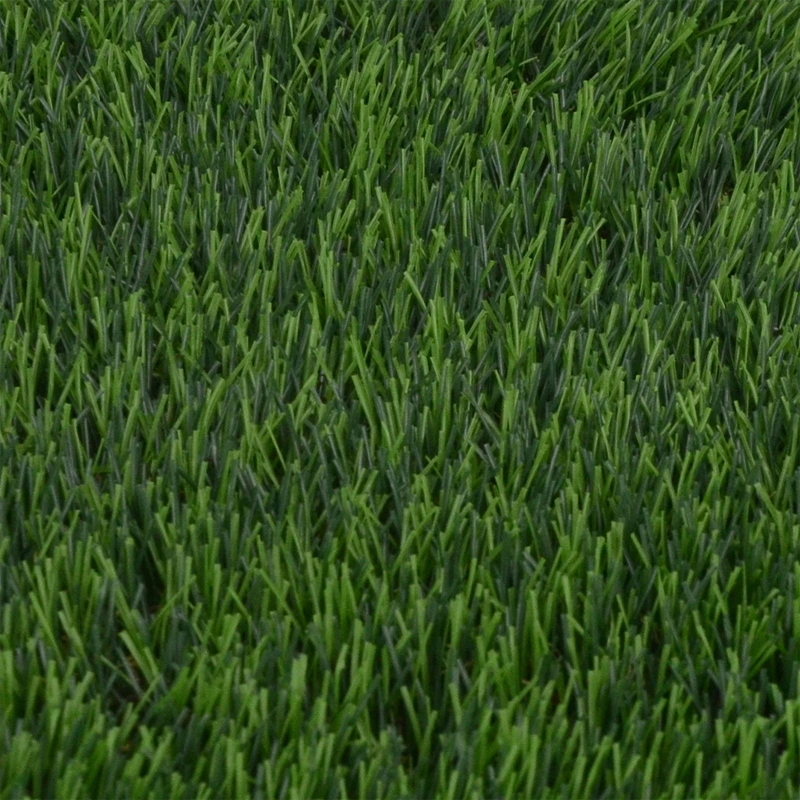
For residential landscaping, appearance and softness are often priorities. A combination of different green tones and thatch can create a more natural appearance.
For pet areas, drainage and ease of cleaning become especially important.
For playgrounds and recreational areas, durability and the overall installation system should be considered.
For commercial spaces, the turf may need to withstand significantly more foot traffic than a typical backyard.
Putting greens require a completely different surface designed around ball roll and consistency.
There is no single artificial turf that is ideal for every application. Choosing based on how the space will actually be used is more important than simply choosing the product that looks best.
2. Understand Pile Height
Pile height refers to the length of the turf fibers.
Longer fibers can create a lush appearance, while shorter fibers generally produce a tighter and more controlled surface. The ideal pile height depends on the application rather than a simple “higher is better” rule.
Turf Distributors similarly treats blade height as an important selection factor rather than an aesthetic specification alone.
3. Look at Face Weight and Density
Face weight describes the weight of the turf fibers per unit of area and is commonly used when comparing turf products.
A denser turf can feel fuller and more substantial, but face weight should not be evaluated by itself. Fiber construction, blade shape, backing, tuft bind, and intended application also affect performance.
4. Check the Blade Shape and Material
Artificial grass fibers are available in different shapes and materials.
Blade design can influence appearance, softness, resilience, and how well the fibers recover after being walked on. Polyethylene is commonly used where a softer, natural-looking surface is desired.
When comparing products, look beyond color and consider how the fiber itself is engineered.
5. Don’t Ignore the Backing
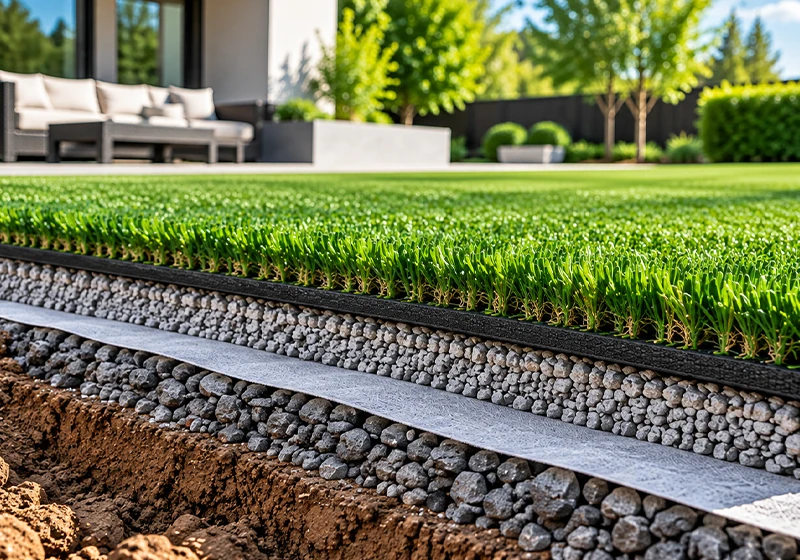
Most people focus on the grass blades, but the backing is an important part of the turf system.
It holds the fibers in place and contributes to stability, durability, and drainage characteristics. Different backing systems are appropriate for different applications and installation conditions.
6. Consider Drainage
Drainage is especially important for:
Pet areas
Rainy environments
Pool surrounds
Playgrounds
Commercial landscaping
The turf, backing, base preparation, and existing site conditions all contribute to the performance of the drainage system. Turf Distributors’ installation guidance likewise emphasizes preparing the base with drainage and slope in mind.
7. Compare Samples Before Ordering
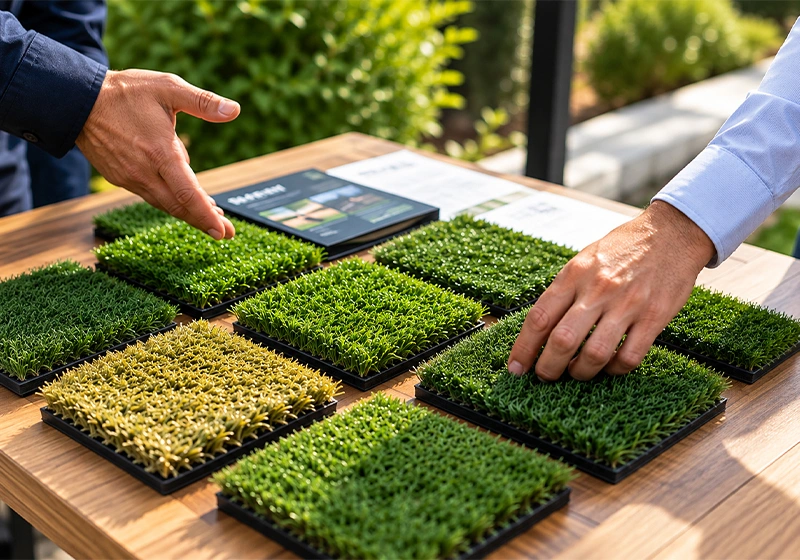
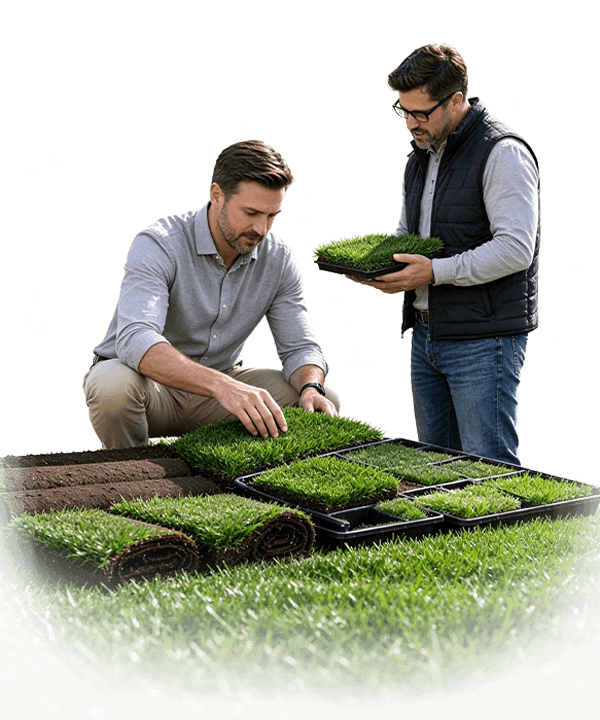
Specifications tell you a lot, but seeing and touching turf samples makes comparison much easier.
Samples allow you to compare color, blade shape, softness, density, pile height, and overall appearance before placing a larger order.
Finding the Right Turf
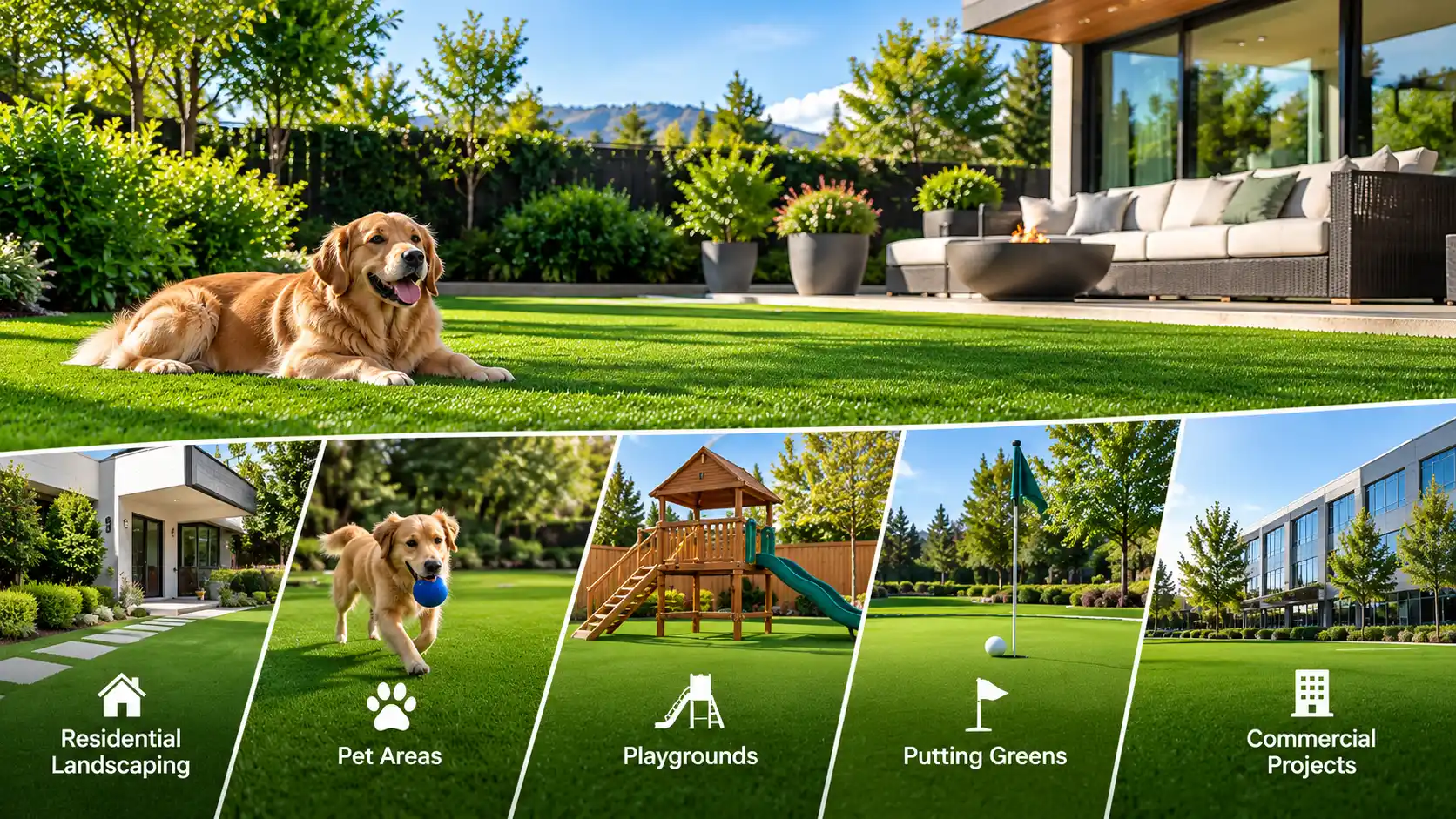
The right artificial turf should balance appearance, performance, durability, drainage, and budget.
At Turf Wholesale, we supply artificial turf for residential landscapes, commercial projects, pets, putting greens, playgrounds, sports applications, and more.
PRODUCTS
A SECOND OF INFATUATION,A LIFETIME OF REPURCHASE

JOIN CLUB
LOVE TO HEAR FROM YOU GET IN TOUCH!
Please fill out the form below and we will get back to you as soon as possible.